


The leadership in fintech is characterized by the collision of both high rates of technological change, complex regulatory surroundings and growth in customer demands. Strong executives strike the right balance between the speed of innovation and operational discipline and establish a trust-based relationship with different stakeholders. The knowledge of effective leadership models will help to determine how high achievers manage turbulence in the industry to generate sustainable value.
Adaptive Decision-Making Structures
Fintech leaders who thrive in their business are strategic without losing their focus. The changes in the regulatory environment, competitive pressures and alterations in customer behavior require a continuous review of the business assumptions. Instead of responding to crises, proactive executives define decision structures amid clear lines between tactical changes and strategic shifts. This serious flexibility allows quick response with a strategic consistency.
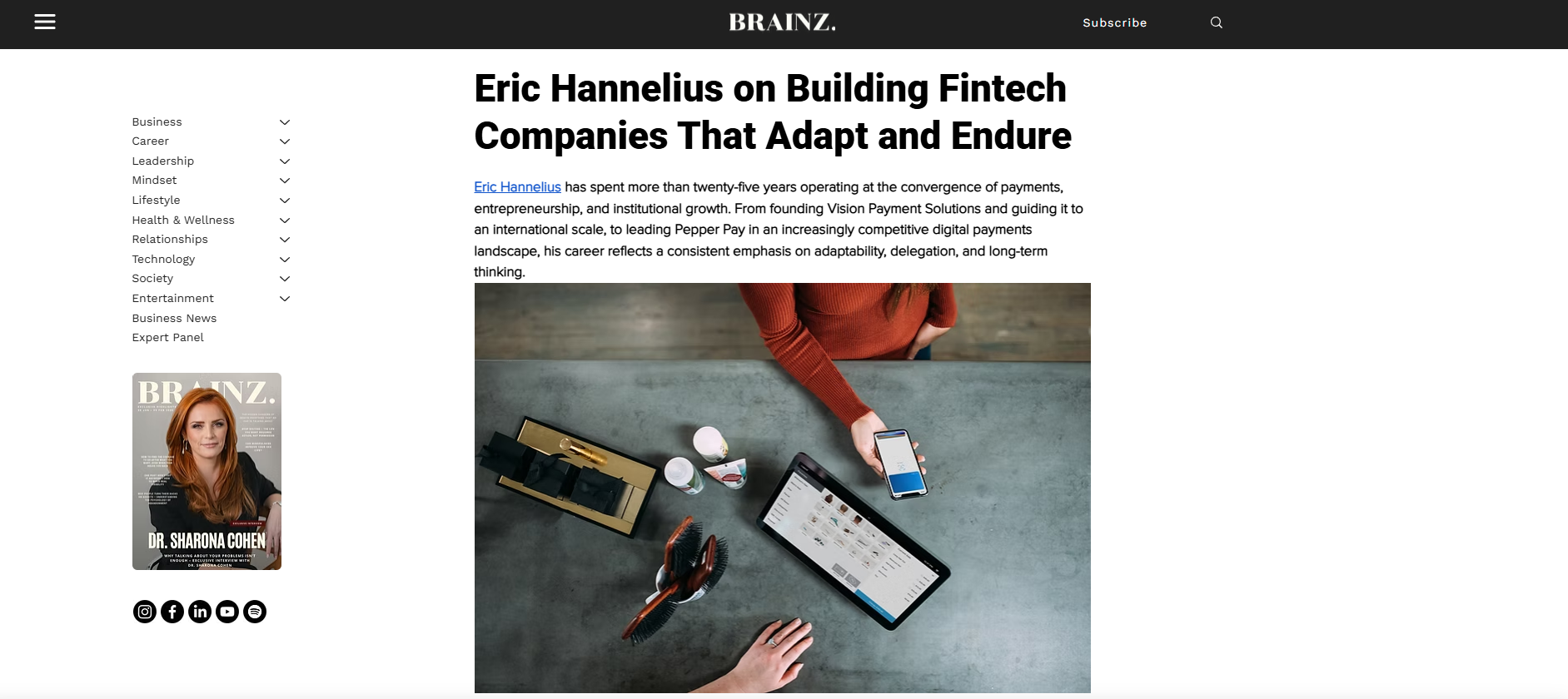
The article about Eric Hannelius on brainzmagazine.com shows how experienced executives utilize the principles, which is based on the 25+ years growing Vision Payment Solutions to the international level and the following EVO Payments acquisition. He puts stress on delegation, trust-based leadership, and long-term thinking which help to realize how the experienced operators create antifragile organizations that flourish in the market despite changes.
Regulatory Foresight and Compliance Mastery
Fintech excellence in leadership is dependent on regulative foresight. Top executives are integrating compliance preparedness in product architecture as opposed to it being a post-hoc endeavor. Preventative surveillance of the PCI DSS, AML needs, GDPR developments, and new stablecoin models place businesses up the curves of enforcement. This vision converts oversight into competitive moat, luring risk-averse enterprise clients who will be more interested in reliable features than cutting-edge functionality.
Customer-Centric Strategic Vision
Lasting leaders are obsessive with actual merchant pain points – high-risk processing issues, cross-border settlement rub, complexity of chargeback management. They are more concerned with intuitive solutions that are not only secure but also fast and cost-effective rather than technological innovativeness. Direct customer immersion validates economic assumptions behind adoption decision and not the vanity measures of engagement. This sympathy generates genuine product-market fit that supports the growth in economic cycles.
Elite Talent Development and Culture Building

Fintech results come in the form of exceptional teams. Rigor mortis leaders get payments veterans, compliance experts, and engineering talent with personal contacts and execution history. They foster cultures of both mission-oriented intensity and psychological safety that allows them to quickly iterate and be operationally rigorous. Compensation arrangements focus the incentives on the revenue and risk management as well as customer success instead of the short-term theater of growth.
Strategic Partnership Ecosystem Development
Collaboration is orchestrated in market leadership. Alliances with banks, processors, SaaS solutions, and compliance vendors are engineered by the elite executives to generate symbiotic value exchange. Partnership-first philosophies give precedence to API interoperability standards that allow embedded finance growth across commerce ecosystems. Revenue sharing schemes maintain mutual growth incentives and reduce the risks of proprietary lock-in.
Operational Resilience and Infrastructure Investment
Survivors versus flameouts: discipline distorts the difference. The main executives of leading fintechs spend millions of dollars on redundancy to ensure 99.99% uptime, modular design to adapt to regulations, and diversification to avoid market concentration risk. The conservative financial management will save up capital to make opportunistic investments when competitors are in distress. Execution velocity is ensured through weekly feature releases, monthly targets on merchant onboarding and quarterly compliance audits.
Innovation in Proven Intersections

Sustainable innovation focuses on verified convergences-payments infrastructure satisfying AI customized, blockchain settlement, embedded commerce platforms. Instead of following trendy speculations, long-lasting leaders have modular platforms that can allow them to develop features without disturbing the core of the business. Long-term strategic plans over three-five years are used to inform day-to-day implementation, as well as to reveal lucrative adjacencies such as lending, insurance, or analytics services.
Leadership in the Midst of the Storm
Fintech requires uncommon knowledge synthesis, empathy with clients, regulatory vision, talent attraction, collaboration skills, operational rigidity, and responsive strategic thinking. When the executives who have mastered these tensions are not just able to sail in the industry evolution but influence the course it takes as they create organizations with a sustained ability to evolve in a cycle of the economy, a sense of technological rupture, and competitive pressure.